Thursday, February 15, 2007

Romantic novels

Oops! Yesterday I meant to blog about romantic books, but I was too busy perfuming myself and stuffing dates with goat cheese for my own romantic evening that I didn't get around to it. I spent a lot of time thinking about what was the most romantic book I ever read. "Romance" novels were right out - I don't find those particularly romantic. As a teenager I used to read them very quickly, just in search of the sex scenes, which, as you may know, are usually at the end, involving a "nobleman" and some sort of "wench" and something that could easily be called date rape. Once I read this story that blew my mind for a long time about a dude who, in the course of "love making" inserted a GOLDFISH in this woman's vagina and then sucked it out again. (!!!)

Eventually I decided that Jane Eyre was the most romantic book for me. I haven't read it for a long time, but I must have read it 20 times when I was a kid. Actually, I have a feeling that if I read it today, I'd find it less romantic and more Daphne du Maurier. Somewhere around college I found British fiction (the Brontës, Warton, Austin) completely unbearable, but I've been thinking of picking it up again to see if my tastes have changed.

I think The English Patient, the movie, is very romantic, but I don't find the book romantic at all. Parts of other books are quite romantic to me, like the bit with the sheet in Salman Rushdie's Midnight's Children (you'll know what I'm talking about if you've read it). I found parts of Wallace Stegner's Angle of Repose romantic. I suppose it's probably becoming clear to you that what I find romantic is a long and tortured unrequited love that lasts decades and is finally resolved with two people holding hands about 10 minutes before they both fall dead.

And here's the most romantic song I know, and although it has nothing to do with books I can't help but include it here:

Tuesday, February 13, 2007

The Coast of Akron


I gave up about half-way through The Coast Of Akron by Adrienne Miller. It started out really great, and Miller is clearly a talented writer, but I thought the book lacked cohesion. Lately it seems like all the books I'm reading have these huge casts - I can barely keep track of all the characters. It's like I'm reading Gabriel Garcia Marquez all the time. And NOBODY can read Marquez ALL THE TIME.

If you're interested, The Coast of Akron is about this woman, Merit, and her parents, both artists, and her father's boyfriend, Fergus. Fergus is rich and eccentric - his story line is all boozy and complain-y, it gets a bit boring, despite the long passages about his gothic mansion in Ohio.

Last night I started reading "The Red Harvest" by Dashiell Hammett. A good, old-fashioned, single-narrator tale. I love reading Hammett, especially the ones that take place in San Francisco. It's so hilarious how his characters refer to their apartment buildings by name. M. and I used to try to do that ourselves - like, we'd say to our friends, "Let's so back to the Warrington for a drink." And our friends would say, "What's the Warrington?" It's cool living in a building with a name. My mom always wanted to name her house - like "Tara" or "Graceland". I think her latest idea is something like "Twelve Oaks", although she needs to plant approximately twelve oak trees before it makes any sense. We used to live on Post Street in SF, apparently Hammett lived down the block!

Thursday, February 08, 2007

Caroline Bergvall

This afternoon I saw Caroline Bergvall speak. She's a writer and performance artist - she didn't perform, but showed us some of her work and talked about the kind of themes she addresses in her work. Her work has to do a lot with time and space, and I almost put myself into a trance listening to her (she has a really sweet accent - I think she's French but lives in Britain) and thinking about time and space. She does some site specific work, but, for example, she was saying how space (say, like, your childhood home - the physical home) is so tied to memory that it's basically an illusion. She also talked about how language corrupts us - well, how it forms us and effects us - and how USING language, and LISTENING to language is this intimate experience.

She also addresses gender issues using the visual arts (although, her poems/writings are very visual as well) - such as the work at left, which is Duchamp's LHOOQ (and a reference to Magritte's La Trahison des Images - I'm also seeing a ref. to The Bride Stripped Bare by her Bachelors, Even, but she didn't mention it) with the Mona Lisa removed (leaving Duchamp's add-ons, the male characteristics - the moustache and beard - which take the form of female characteristics, namely breasts and uh, bush.)

I wasn't really familiar with her work so I looked up some online when I got home - to tell the truth, it's not the sort of thing I could read for hours, but it's certainly interesting and clever. Here's a excerpt from one of her artists books.

I found some of her work online - Eclat was specially packaged for online viewing (and printing out, if you like).

Here are some of her reading/performances.

Wednesday, February 07, 2007

Look at Me

There's a lot more to Jennifer Egan's 2001 Look at Me than is initially apparent. Previously, I wrote about how I was attracted to her presentation of how we're ruled by images. The main character, a model whose face (read: livelihood) was destroyed in a car accident, finds herself in an identity crisis after reconstruction. Egan brings out some complicated theoretical issues about the power of images that I'd go so far as to call Foucauldian. What could have been a fluff piece on a model searching for her identity rather takes a deeper look into how it's nearly impossible, today, to separate the internal from the external.

Essentially, Look at Me is about various crises of identity - the model's, a younger girl, her uncle, a man with a mysterious past. These people all struggle to define themselves, despite of and because of the influence of American culture (the book takes place in both NYC and Rockford, IL - what could be more American?)

The second half of the novel is almost sci-fi, due to the far-sighted vision of Egan, who, though she wrote in a pre-9/11 world, somehow anticipates those events, as well as the crush of "reality" tv and internet programming we're experiencing now.

Chapter one is online, if you'd like to have a look, and here's an interesting interview with Egan about her book, and here's another article that kind of contains a spoiler, so you might want to wait until you've read the book before you read it.

Friday, February 02, 2007

My catalogue

I finally posted (some) of my books in LibraryThing. It's cooler than I thought, there are a couple of ways to organize and view your titles - like, I can visually browse my library, and so can you! And apparently somehow you can also make a photomosiac of your face made from the covers of all your books. Can't do that with my excel spreadsheet. I'm going to think about getting a life-time membership, which is only $25. With the free membership, you can only list a personal catalogue of 200 books, which is, conveniently, approximately how many fiction books I have. But that doesn't count all my Young Adult fiction, M.'s sci-fi, my plays, or our reference books or any of my art books. Well, here's my catalogue, if you want to have a look!

Thursday, February 01, 2007

Harry's Dumbledoor

Oh, It's a big day for Harry Potter fans! First, it was announced that the 7th and final book is finally available for pre-order and will come out on July 21st (the day before my birthday!) Wee! I like to order mine from Amazon.co.uk, so I get the true, British version. Did you know the "American" version and "British" version are slightly different? Apparently because American kids are thought to be too stupid to figure out what a jumper is (and, perhaps they are, but why not give them a chance? Expose them to something new?)

And speaking of exposing something new, the second big HP news of the day is that our own little Daniel Radcliffe is starring in Equus in London, and some publicity photos have got people stirred up. (In case you're wondering, and I know you are - he's 17). I haven't read Equus since college, and I've never seen it on stage, but, of course, it does call for the lead actor to be nude, and it is very sexual, at least in imagery. Needless to say, it's not your average high school production, not least because it also requires an actual horse. Back in my day it was a monologue of choice for the more adventurous.

Wednesday, January 31, 2007

26a

I started reading 26a, by Diane Evans. It had some great reviews and also won the Orange Prize for New Writers and was nominated for the Whitbread. I just couldn't get into it, and I've put it aside for now. Although, to tell the truth, as I'm writing this and looking for pictures, I'm reading more reviews, and they are so good! But, the first 50 pages... not so much. At first I wasn't sure if it was a story about actual humans or woodland creatures - turns out it's about a couple of squirrels or something that get reincarnated - I did not get that. Maybe I'll go back to it later - everyone keeps saying it's magical - and I do love magical.

So, after I dropped 26a I picked up Look at Me, by Jennifer Egan. So far, it's really interesting. It's appealing to the art historian in me, because thematically it's about The Image. The main character is a model who was in a car crash that necessitated the reconstruction of her face, so she's going through this struggle of identity. Whereby her "old" face gave her a lot of power, this "newer" less model-ly face doesn't stop people in their tracks. So, through the loss of her image, she's lost her power. Furthermore, having had a change in her image, she's unclear who she really is. She associated her interior with her exterior, see? And now she has to redefine herself. It's giving me a lot to think about in a Lacan/Foucault sort of way. I can hardly put it down.

Thursday, January 25, 2007

What is the What

I finally finished What is the What, a new novel by Dave Eggers. Lately I've been reading really slowly and not frequently - it took me about a month to read this book! It's a painful book to read, because of the (beyond) sad events of the story, and it's an important book. People are saying, and I agree, that it's one of the most important books of our time, and that Eggers is certainly one of the best writers of his (our) generation.

The story is about one of the Sudanese Lost Boys, young men who were misplaced due to conflicts in Sudan, who walked hundreds of miles to seek refuge after losing their families and villages to war. It is told in the voice of Valentino Achak Deng, who, despite growing up in these horrors, has a sensitive and kind heart, who's hopefulness and thoughtfulness provide insight into the capacities of the average human being.

What is the What is the result of a collaboration between Eggers and Deng - they met after Deng, along with other refugees were granted a kind of asylum in the United States, and were introduced through Mary Williams (daughter of Jane Fonda), a founder of the Lost Boys Foundation in Atlanta. In Deng's preface, he writes, "I told my story orally to the author. He then concocted this novel, approximating my own voice and using the basic events of my life as the foundation... though it is fictionalized, it should be noted that the world I have known is not so different from the one depicted within these pages."

When I was given the book, I started flipping through the pages, looking for the footnotes and endnotes of Egger's A Heartbreaking Work of Staggering Genius, which I loved. This book has less of the post-modern "trappings" of his other work, but the narrative is ingeniously split between present-day events (Achak being robbed and beaten in his Atlanta apartment) while he addresses, consecutively, his attackers, his Christian neighbors, who don't hear him call for help, the receptionist at the hospital, and so on. This telling of events, of specifically addressing his audience and seeking to share his experiences, is what makes What is the What both so incredibly moving and inclusive, but also elevates the novel to a status that myself and others call it "one of the most important books of our time." Why? Because it recreates events happening a world away (happening today) from something I barely understood to something personal, something the reader will not be able to mentally separate themselves from after reading. (McSweeney's helpfully provides a list of manageable TEN THINGS YOU CAN DO FOR SUDAN).

I've got so much respect for Dave Eggers (and Deng). After publishing A Heartbreaking Work of Staggering Genius, he started McSweeney's and 826 Valencia - a non-profit center to promote writing and provide tutoring for children age 6-18 (and publish their work!) which now has chapters in 6 cities AND the profits of What is the What are going to the Valentino Achak Deng Foundation, to help aid in the rebuilding of Marial Bai, Achak's village.

I hope you'll be able to read this book too, it's an amazing experience.

Monday, January 22, 2007

Bookcrossing

I could NOT be more excited! Yesterday, I "released" a book through Bookcrossing, and that very day, someone "caught" it and left a journal entry! It really is a great idea - it promotes the sharing of books (one of their mottos is it is better to give than to reshelve), and it really is exciting and fun. There's a section on the website where you can Go Hunting - you navigate to your city, and you can chase down books that have been recently released. It's kind of like a treasure hunt that includes the whole world. For example, as of this posting, there's a copy of The Da Vinci Code in the Kabul Cafe in Afghanistan. Ok, bad example. There's a copy of しゃばけ in 三条市立図書館2階 学習室, Japan! Go get them!

Sunday, January 21, 2007

Book Exchange

Today I had a lovely ladies' lunch in Logan Square at Lula Cafe, and took along a book to leave in the Logan Square Community Book Exchange. I read about it last year in the Chicago Reader, and I thought it was like the greatest thing ever. This guy temporarily removed a newspaper-type box from the street, took it home, painted it, and put it back with books inside. It operates on the take a penny/leave a penny principle, and today it was fully stocked!

I left a copy of Chloe Plus Olivia, a steamy anthology of lesbian fiction. Actually, not all the stories are steamy, now that I think about it, but those are the ones that I remember. (Hmm?) I decided to combine the Book Exchange box with another book-sharing venture that I love - Bookcrossing.com, which is another concept I'm really into - Bookcrossing provides ways for you to track the travels of your books. I first found out about it when I lived in San Francisco, and I was up at my favorite spot - the top of Nob Hill, in the little park around the fountain, and under my bench I spotted a book. Inside the cover was pasted a number (that's the bookcrossing ID) and a link to the website. When you find a book, you can make a journal entry on the website, then the idea is to "release" the book again. You can check out my profile. I've released 28 books. OK, so no one's ever logged on and claimed them, but I keep trying!

Even though I have a huge collection of books I want to keep, I'm a big proponent of sharing books, and I give books away all the time. I love both these methods (the Logan Square box and Bookcrossing) of promoting the sharing of books and providing a way for it to be done creatively, frequently, and easily!

Oh, I really want to make a box for my neighborhood, Andersonville, but I haven't quite got up the courage to essentially steal a box off the street (but then you give it back - everyone wins)!

By the way, next to the book box, someone's put up a "video exchange" box. Before lunch it had a bunch of Adam Sandler VHS tapes, and after lunch they were all gone and replaced with tapes on wine tasting.

Thursday, January 04, 2007

On Beauty

I just reread Zadie Smith's On Beauty. I saw her speak once in San Francisco after White Teeth came out. Somebody asked her what she liked to read, and she said something like she didn't think it was really possible to read a bunch of books and retain them very well, that (if I'm remembering correctly) she just wanted to know one book really well. And she may have said (jeez, I have a terrible memory) that for her that book was Howards End, or perhaps I just made that up. Anyway, On Beauty is an homage Howard's End, which I haven't read myself, but am inspired to read soon.

Like White Teeth, On Beauty has a cast of characters, and no small focus on racial issues and diaspora. On Beauty is the one book of fiction I made time to read during my master's program - and glad I did, because it also focuses on a subject near to my heart: art. Two scholars, one a conservative, black, old school art historian (Monty Kipps) and the other a liberal, white, hard-core theoretician (Howard Belsey), find themselves at odds in the same small-town college. As a liberal myself, naturally I found Kipps for the most part reprehensible, although Smith does go to pains to give him good arguments. The Kipps' are rude to the help and never very likeable.

The extreme views held by both parties (bridged only by the familial matriarchs) offer a fascinating glimpse into the minds of these uber-intellectuals, while at the same time illustrating their foibles (Howard is as worried about premature ejaculation as he is about getting tenure.) Smith is obviously well schooled in art theory, and her analysis of various Rembrandt's work, as well as so-called traditional art history itself, is insightful. Howard contemplates The Sampling Officials of the Draper's Guild:

This is what judgement looks like: considered, rational, benign judgement. Thus the traditional art history.
Iconoclastic Howard rejects all these fatuous assumptions. How can we know what goes on beyond the frame of the painting itself? What audience? Which questioner? What moment of judgement? Nonsense and sentimental tradition! To imagine that this painting depicts any one temporal moment is, Howard argues, an anachronistic, photographic fallacy. It is so much pseudo-historical storytelling, disturbingly religious in tone. We want to believe these Staalmeesters are sages, wisely judging this imaginary audience, implicitly judging us. But none of this is truly in the picture. All we really see there are six rich men sitting for their portrait, expecting - demanding - to be collectively portrayed as wealthy, successful and morally sound. Rembrandt - paid well for his services - has merely obliged them.


Smith elegantly introduces time as a thematic element, using art to make her case - although the characters that appear in the book don't go through radical changes, they do change, and every minute. She writes:


... forty-three years ago, he was an uncultured, fiercely bright, dirty-kneed, enraged, beautiful, inspired, bloody-minded schoolboy who came from nowhere and nothing and yet was determined not to stay that way - that was the Howard Belsey whom the Staalmeesters saw and judged that day. But what was their judgement now? Howard looked at the men. The men looked at Howard. Howard looked at the men. The men looked at Howard.


What initially hit me as a rather oppressive redundancy suddenly became hyper-realism - each second, our perspectives change, because time has passed. As the novel progresses and reaches its stunning ending, this theme is beautifully expressed in one, final, very visual moment that made me really weep to have read such a great book.

Monday, January 01, 2007

Kelly's Top Books in 2006

This year my top favorite books were:
In the Image, by Dara Horn
The World to Come, by Dara Horn
Special Topics in Calamity Physics, by Marisha Pessl
On Beauty, by Zadie Smith
A Girl Becomes a Comma like That, by Lisa Glatt

Actually, I'm re-reading On Beauty right now - next up is a book given to me by friend A.: Dave Eggers new book, What is the What.

What were your faves this year?

Wednesday, December 20, 2006

Boy Detective Fails

I finally finished Boy Detective Fails, by Chicago writer Joe Meno. I write "finally" because it seemed to take a long time for a book that occasionally has one sentence chapters. It begins with Chapter 31, letting you know right from the get-go that you're in for some po-mo lit (that's if you didn't notice the "note to the astute reader" on the copywrite page: It may be of interest to you to note, for purposes of decoding the hidden story placed within these pages, that A=N.)

I love the heavily footnoted and hidden-notes-in-the-copywrite pages of, for example, Dave Eggers' Heartbreaking Work of Incredible Genius, or, as the "astute reader" knows, the po-mo stylins' of Pessl's 2006 Special Topics in Calamity Physics, so it was with a bounce in my step that I set off for Boy Detective Fails, which comes complete with a decoder ring in the back, for solving mysteries.

An absolute exercise in the definition of postmodern literature, the short novel deals with existential issues of our times - you know, that things make little sense, that often there are no reasons for the things that happen, that bad things happen to good people (see In the Image, by Dara Horn, for a more in depth analysis), that there really are no easy answers. This is literally spelled out several times throughout the book - for example, in a conversation with a therapist, the doctor says, "The facts. The truth. Life has very little to do with either."

As a boy, the Boy Detective (as he is referred to throughout the book) solved mysteries with his sister and a friend, and, tableau-style, the reader is introduced to this past in the beginning of the book. The Boy Detective and his friends solve cases, accompanied by titles like "Boy Detective Solves Fatal Orphanage Arson." Like the Scooby Doo gang, they follow the clues to their logical conclusion. Later on, the Boy Detective's sister kills herself, and the boy detective attempts to understand what led her to that deed. Naturally, that mystery is less easy to comprehend. The Boy Detective, no longer either boy or detective, is unable to find peace and proceed to the next stage of his life until he embraces mystery and chaos.

I found the distance of the main character quite difficult to deal with, despite his pains and his emotional state, he's difficult to relate to, and frequently I found myself wondering if he was even an actual character at all. Shape poetry, variation in font, text, and style are capably managed and really exciting and interesting, but personally I hope for more emotional resonance, which is frequently lacking in the postmodern expression.

Here's an excerpt.

Monday, December 11, 2006

Best of 2006?

Salon is doing a week of the best books of 2006 - starting today with blurbs from a bunch of writers. I haven't heard of most of the books listed, and, frankly, it reads like a laundry list of authors trying to impress each other with their obscure references. The Road by Cormac McCarthy is mentioned several times. Jennifer Weiner of In Her Shoes writes the following:

For me, 2006 marked the lamentable triumph of style over substance. Designated PYT Marisha Pessl's much-hyped debut came tap-dancing in, all bells and whistles (and footnotes, and illustrations). There may have been a strong brew underneath, but I couldn't get through the froth. [...]

I'll pick two winners: Ken Kalfus' "A Disorder Peculiar to the Country," in which a pair of narcissistic New Yorkers have their divorce interrupted by 9/11. Hilarity ensues. And for those who crave a big, sprawling, old-fashioned, romantic tale over the too-cool-for-school po-mo tricks of perspective or punctuation, Stephen King's "Lisey's Story" was a completely ravishing meditation on the thin skin between reality and nightmare, and the mysteries of writing, and of marriage.


Ooo - SNAP! So, she didn't like Special Topics in Calamity Physics! I thought that was rather rich, considering that the best thing about In Her Shoes were the poems by Elizabeth Bishop. Actually, I thank her for the introduction, but I really felt that Weiner was holding back in that book. Parts were quite beautiful, but it was like she was determined to a write a "light" book, it felt groomed for mass-appeal. Possibly this Disorder Peculiar to the Country is worth reading, but I really find it hard to believe that Stephen King's book is (although it surely is big, sprawling and old-fashioned - that's a good thing?) I happen to like too-cool-for-school po-mo "tricks", which is why I'm now reading Boy Detective Fails by Chicago author Joe Meno. It comes with a decoder ring - neat trick!

Tuesday, December 05, 2006

Childhood reading habits

Please copy and paste this into comments and supply your answers! Mine are below.

1. Did you own any books as a child or rent from the library? What were they?
2. Were you a re-reader as a child? If so, which book did you re-read most often?
3. What’s the first adult book that captured your interest?
4. Are there children’s books that you passed by as a child that you have learned to love as an adult? Which ones?


1. Did you own any books as a child or rent from the library? What were they?

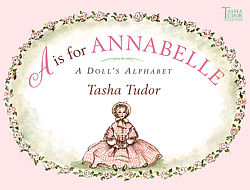
I had a lot of books, and I also wore out my library card. The books I'm most remember from childhood are all the Dr. Suess books, which my dad used to read to us before we went to bed. Also, I loved this book called A is for Annabelle and Where the Wild Things Are.

2. Were you a re-reader as a child? If so, which book did you re-read most often?

Oh yes, I read them all over and over again. I think that must be why I remember my childhood books so well, and today, even books that I remember loving, I sometimes can't really remember what they're about, because I don't have time to read them again and again.

3. What’s the first adult book that captured your interest?
Oh, how embarrassing, I think it must be those V.C. Andrews books, and I must have been... I don't know... 7th grade, maybe. And my mom forbid me to read them, because I was having nightmares, but I couldn't resist them (just as Corrine couldn't resist the incestuous love of her brother!) and read them under cover of night.

4. Are there children’s books that you passed by as a child that you have learned to love as an adult? Which ones?
I still love reading "children's" books today - there's Harry Potter, of course, which is great, and I recently read the Philip Pullman His Dark Materials books. And sometimes I read books to my little one year old friend, who's got some very charming infant books, like Goodnight, Gorilla, Goodnight Moon, and one, which I read for the first time just the other night, Jamberry, by Bruce Degan.

Monday, December 04, 2006

Unsuggester

LibraryThing has a new feature called the "Unsuggester" - you type in a book you love and it gives you a list of books you're sure to hate. What purpose this might serve I don't really know, but it's kind of interesting. I typed in Zadie Smith's On Beauty, which I'm re-reading right now, and, sure enough, it gave me a list of titles I don't want anything to do with, like books on Jesus and Christianity, a bunch of sci-fi by Herbert and Heinlein, and bad chicklit from Jennifer Crusie.

I also tested out the "Suggester" - or "good" books, according to LibraryThing. Using the same title, I got a list of books including some of my faves, like, Safron Foer's Extremely Loud and Incredibly Close and Frazen's The Corrections, and also books by author's I really enjoy like Arundhati Roy, Ian McEwan and Phillip Roth. It recommends The Blind Assassin by Margaret Atwood. I'm crazy about Atwood but I couldn't even finish The Blind Assassin. Surprises were The Accidental by Ali Smith, which looks like teen fiction (one of my fave genres), something called Cloud Atlas by David Mitchell and The line of beauty by Alan Hollinghurst, a book I've always been vaguely interested in.

Friday, December 01, 2006

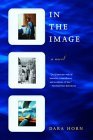
In the Image

I was so captivated by Dara Horn's The World to Come that I ordered her first book, In the Image (2002) the second I finished reading it.

Like The World to Come, In the Image is a thematic book, spanning generations and continents, with each character linked to the other by coincidence, family, or shared experience. One of the characters, Bill Landsmann, an elderly gentleman from Vienna, a Jewish man, "who should be dead" has a vast collection of slides - and the reader is treated to a description of his collection. But more than an art history lesson, Horn focuses on the issue of images - a concept of visual representation that deserves some further thought.

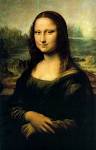
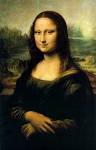
Deep into my own master's program in art history, I was having a discussion with my sister about art, and she interrupted me to say, "Why do you keep calling everything 'images'?" And I laughed and told her it was a snooty technicality - that, for example, if I were in class talking about, say, The Mona Lisa, and there was a slide of the Mona Lisa, what I was referring to was actually an image of the Mona Lisa, not THE Mona Lisa, the work of art. ("Work" of art, by the way, is beset by it's own set of snooty technicalities - ie. what is the "work"? The end product, the art? Or the process of creation?) Furthermore, even the actual Mona Lisa, the one hanging in the Louvre, is itself an image of an actual woman (well, you know, supposedly. Ok, say I'm talking about Cézanne's Mont Sainte-Victoire...).
Horn rather brilliantly returns to the inherent questions regarding the definition of the "image" and also inserts another aspect of the image's misleading qualities - that it presents a moment, and what comes before and what comes after may or may not be available. Her characters are stuck in images, or rather, images are stuck in her characters. Bill Landsmann is practically ruled by his collection of images, his stake in their cataloguing and controlled viewing is tied to his own carefully constructed memory of events. Other characters are also haunted by the image of moments that have changed or altered their lives, but to the point that they loose sight of the complexity of events that lead to these single moments. Therefore the falsified simplicity of the image occasionally leads characters to remain "stuck" in the image, unable to emotionally move beyond that moment.

Another theme of In the Image is the story of Job, from the Hebrew Bible. As Horn says in an interview in the back of the paperback:
What intrigued me most, though, was what I saw as the ultimate question of the book of Job. The book asks the question that so many people ask themselves: Why do bad things happen to good people? But as I read the book again and again, I decided that this question was mis-leading. To me, the central question of the Book of Job isn't that common questions - which, after all, can't really be answered and isn't answered at all in the book of Job - but rather: Are people "good" to begin with, or are they shaped by their experiences? What makes "bad things" important isn't whether they happen to you or to someone else because that's not your decision. What makes them important is the part that's your decision: what you do with them once they've happened.

Horn easily moves her narrative between time and space - some characters exist in the turn of the century in Manhattan, others in pre-WWII Amsterdam, others in WWI in the trenches, still others in today's New York and New Jersey. But Horn also allows her characters to live in dreams and fantasies; she's an innovative writer that even alters her narrative style to recall ancient Jewish texts:
19. And the father of William Landsmann also heeded not the cry of his wife, and he allowed her to perish, 20. and thus did William Landsmann's mother perish when William Landsmann was a young boy, 21. but William Landsmann did not curse God. 22. And William Landsmann was uprooted from his native land, and uprooted again, 23. And upon reaching the land of New Jersey, William Landsmann's father took his life, leaving William Landsmann alone, with neither mother nor father.

I find Horn's book (alas! There are only two!) so inspiring - she makes me want to pull out my dusty Bible and rethink parables, she makes me want to sign up for a class at a synagog, she makes me, yes... want to be a better person.

Monday, November 27, 2006

Halfsies

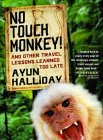
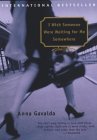
I read half of a couple of books lately - I Wish Someone Were Waiting for Me Somewhere, by Anna Galvada and No Touch Monkey, by Ayun Halliday.

Mostly I was interested in the chapter on Amsterdam hookers in No Touch Monkey - recommended by a friend. It's re: the law of the Red Light District: Don't photograph the hookers. Halliday is one of those $20 a day (or less) travellers - she's really into sleeping on park benches and proud of the good funk she gets going after wearing the same clothes for weeks on end and not showering. There's a time and a place for all that, sure - but for me that time and place has passed.

I Wish Someone Were Waiting for Me Somewhere is a book of short stories translated from the French. Some are breathtaking, but some are kind of lame. Each story has a similar voice and tone, making them somewhat difficult to differentiate. Neither book is holding my attention, and I just got In the Image by Dara Horn, so I'm going to move on to that one.

Monday, November 20, 2006

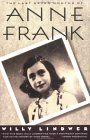
The Last Seven Months of Anne Frank


I picked up a copy of The Last Seven Months of Anne Frank: The stories of six women who knew Anne Frank, compiled by Willy Lindwer, in the Anne Frank house in Amsterdam. I believe it was made in conjunction with or after the excellent documentary, Anne Frank Remembered. One woman was friends with Anne before she went into hiding, Hannah Elisabeth Pick-Goslar (she is also in the documentary), remarkably found Anne later in the camps, although they never actually saw each other because there was a wall between them. Most of the other women met Anne and her family in the camps - they were also people who had been in hiding, and, unfortunately, caught at the last minute. Each of these remarkable women, in their 70s and 80s when they recount their tales, mention how they new the Franks - how they busted up batteries with Anne and Margot and Mrs. Frank, a disgusting job but one which allowed them to talk with each other - and later how the girls had contracted typhus and were dying. But each story is, fittingly, their own, beginning before the war, their experience in the camps, their release after the war was over, and how they cope with their life experiences at the time of publication - most quite honest about how they choose not to remember certain details as a form of self-preservation, most also not able to understand how they survived while others died.

The book is not just a tribute to these six women, and, of course, Anne, but to all women who suffered during the war. It's a beautiful tribute to the sisterhood of women, extending across boundaries of religion, country, and race. Two of the women in the book formed a little club which, they both say, was the only way they survived. Writes one (Lenie de Jong-van Naarden):
Women seem to have greater endurance, to take the orders less to heart, and perhaps they are a bit more independent... Our little club of women has stayed close all these years, right up to today. Without each other, we wouldn't have made it.

Thursday, November 16, 2006

Muhammad Yunus


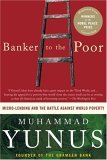
Muhammad Yunus was on the Daily Show tonight. He won the Nobel Peace Prize this year for his work providing loans to poor people - sometimes very small loans (a couple of bucks, even) to very, very poor people. Like, beggars. Tonight he said that 97% of the loans are given to women. Yunus is Bangladeshi, so I originally perked my ears to this story (which I first heard about on a great interview on NPR) because it reminded me of my own period living in Bangladesh, and because he has a beautiful Bangladeshi accent that makes me feel all cozy inside. Obviously, he's a brilliant guy, and a wonderful humanitarian. He looked to the most marginalized sections of humanity and had faith in them. Once I had a brilliant idea that homeless people were an untapped resource, and that ad firms should consult the sign-bearing homeless for their marketing savvy (an idea I still hold to), although, instead of saying I should win the Nobel Peace Prize, a certain husband said I was a depraved human being! Genius, you know, is so infrequently recognized.