Thursday, April 10, 2008

Hard Times

There's a great article in Bitch magazine, Hard Times by Sarah Seltzer, that addresses the disparity of books by women and reviews by women vs. books and reviews by men in the NYT Book Review. She also lists some misogynist comments by reviews to recent feminist books - the sort of knee-jerk reactions to everyday feminism that we'd like to think the Times would be above. She quotes Toni Bentley’s review of Katha Pollitt’s Learning to Drive:
“An enraged, educated woman (Vagina dentata intellectualis)…is a force to be reckoned with, a kind of intellectual Mike Tyson—though, apparently, she is still not as likely to be seduced into bed as the bombshell bimbo, one reason she’s so irate.”
Vagina dentata intellectualis! Excuse me while I change the name of my blog!

I read a lot of book reviews, and I listen to a fairly ridiculous amount of short stories and fiction on my 'pod, and let me tell you - the number one complaint, the perhaps single complaint I have is that there are not enough women writers being recognized. I don't know why people think "feminism" is such a dirty word - they love to be the first to act like a feminist is some crazy, hair-covered woman likely to fly off the handle. At its most basic, it's just about equality. Like most feminists, Seltzer is just asking for a level playing field.

Tuesday, April 08, 2008

Venus

It's not easy to read plays. For the most part, they're meant to be seen on stage, and reading them requires a lot of imagination, a different pace from novels, and a modicum of theatre know-how (I can't tell you how many times I've heard people read the character's name before the line).

But, I find reading plays very rewarding - particularly Shakespeare, which benefits from multiple readings, and plays that I want to see, plays that I saw once and want to recreate in my mind...

Venus, Suzan-Lori Parks' play about the so-called Venus Hottentot, is particularly challenging to read because so much is left to the stage directions, or what Parks calls "unconventional theatrical elements" in her note at the beginning. She differentiates between a rest and a spell, and there are frequent passages in the text that read just the characters names and no lines:
The Venus
The Chorus of the Spectators
The Venus
The Chorus of the Spectators
The Venus
The Chorus of the Spectators
The Venus
The Chorus of the Spectators

She also uses inventive spelling (it sometimes read like a text message) to indicate accents or perhaps pace - things that may or may not translate to the stage, but are interesting to read:
The Chorus of the Court
Outrage! Ssanoutrage!
(Order order order order.)


I thought these choices were quite interesting because the play is essentially about looking (if you're unfamiliar with the sad and true story of Saartjie Baartman, she was an African woman who was essentially kidnapped and taken to Europe where she was the object of various vaudevillian/circus freak shows. People paid to look at her and extra to touch her. Even after she died, her pubic area was kept on display in a museum and only buried after repeated appeals from her own country and people.) From an academic point of view, the Venus is really a classic case of the objectified woman - and, beyond that, an African woman. Parks explores this low-point of history and its many aspects - the "other", the non-humanizing, the hyper-sexualizing of the African woman, the pseudo-science applied to non-European standards of beauty, the complicitness of the crowd... the list goes on. I would be interested to see this show on stage one day. Has anyone seen it?

Monday, April 07, 2008

Eyes Wide Open

My friend Sonya ran into someone reading Ursula Le Guin for her amazing blog, People Reading. I've been interested in reading some of her work because she's a pioneering woman in the otherwise pretty male-centric world of sci-fi. In February's Harper's, Le Guin published a response to the various reports on the decline of reading that have come out recently. (I blogged a little about that in January.)

Le Guin's article, Staying Awake: Notes on the alleged decline of reading is really amazing, and I encourage you to read it at least once! Aside from challenging the idea that there's a decline in reading (she asserts that, historically, hardly anyone read), she blames the publishing industry for focusing on books with quick returns rather than long-term appeal. Le Guin's not trying to convert non-readers, she's harsh on those people who claim they fall asleep the minute they pick up a book - she's writing to us readers who make time for books - who read wide awake. She writes:
Once you've pressed the ON button, the TV goes on, and on, and on, and all you have to do is sit and stare. But reading is active, an act of attention, of absorbed alertness - not all that different from hunting, in fact, or from gathering. In its silence, a book is a challenge: it can't lull you with surging music or deafen you with screeching laugh tracks or fire gunshots in your living room; you have to listen to it in your head. A book won't move your eyes for you the way images on a screen do. It won't move your mind unless you give it your mind, or your heart unless you put your heart in it. It won't do the work for you. To read a story well is to follow it, to act it, to feel it, to become it - everything short of writing it, in fact. Reading is not "interactive" with a set of rules or options, as games are; reading is actual collaboration with the writer's mind. No wonder not everybody is up to it.
Like Michael Moore's solution to our national health care crisis, that health care should not be a for-profit business, Le Guin wishes publishing houses and chain bookstores would change their business models. I agree society would benefit from a lot of industries changing from for-profit models to socialist ones, but how do you convince entire, wealthy, capitalist industry leaders to give up their profit margins? Revolution, I guess... Until then we can relish them being healthily skewered in Harper's.

And I'm going to pick up a copy of Le Guin's 1969 Left Hand of Darkness from my local independent bookseller.

Monday, March 24, 2008

Skinny, by Ibi Kaslik

When I was but a teenager, I hate to tell you how many books I read about girls with eating disorders. A lot of these books followed the same formula - an ever so slightly chubby adolescent from an upstanding family has a few pressures and eventually almost dies from anorexia or bulimia. What's interesting is that a lot of these books literally work as How-To books for eating disorders, describing in detail how to get your own! I know I certainly picked up a few bad habits myself from those books.

Skinny is a new book by Canadian Ibi Kaslik, who, not surprisingly, had an eating disorder herself. The main characters in the book are Gizelle and her sister Holly. Gizelle's had to drop out of medical school due to her illness, and Holly, in contrast, is an athlete. Chapters switch the between the perspectives of each girl, with Gizelle's beginning with snippets from a medical text, giving an eerie, dry tone to the emotional story.

Skinny differs from those "anorexic books" of my youth in that, instead of focusing on the obsessive behaviors of the anorexic, Kaslik writes about the obsessive thoughts of her main character. In fact, there is only one scene in the book that describes (briefly) how Gizelle throws up her dinner. Seriously, if you've read any of these books (why can't I remember a single title?) I'm sure you'll agree that this is quite unusual. As I recall, so many of them go into absolutely pornographic detail in how to starve yourself and/or how to most efficiently become a bulimic - as well, of course, of how to hide it from your parents.

Skinny feels much less like a book from the Eating Disorder Genre and more like a really great book about a girl who has an eating disorder. Kaslik's writing is poetic and I think she really challenges the YA description. It's a book that would hold appeal for a wide range of readers. I couldn't put it down.

I am Legend

I was surprised to find out that the Will Smith movie, I am Legend, was based on a 1953 novel by Richard Matheson. According to Wikipedia, the book was highly influential to the now-popular "zombie genre" as well as Stephen King, who said, "without Richard Matheson I wouldn’t be around."

Just to get a few things out of the way, the movie and the book share little in common, besides leaving the world occupied by vampire/zombie-types while the only unaffected person is Robert Neville. Aside from that, it doesn't take place in New York, Neville is (specifically) white, and not a former military dude/brilliant scientist. The zombie-types are actually quite functional, retain their speech and come to taunt him by night and call out his name. The "infection" does not spread in the same way, and perhaps most shockingly, Neville does not have as his soul companion a wonderful dog named Sam.

What it does hold in common is what I found most interesting about the movie (and others like Cast Away): how a person operates day to day in absolute isolation, and, with everyone they loved dead and gone, why they should continue living.

There were a few racial identifiers in the book that I found quite strange (maybe because I had a clear view in my mind of Smith as the main character). The writing is not great (it's a little Stephen King-y, or vice verse) but it's a very interesting story and a quick, fun, read.

The title, by the way, is neatly explained in the book - I'll leave that for you to discover!

Monday, March 10, 2008

Twilight

Twilight (2005) is a YA book by Stephanie Meyer, about a young girl (16?) who moves to Fork, Washington, and before long meets a family of vampires at her high school. I don't think I'm ruining it by telling you that she falls in love with one of them. I found Twilight ridiculously addictive, and I read the approx. 500 pages in a matter of days and am fairly thrilled that there are 3 more for me to read.

Like the vampire tales that came before, Meyer borrows some vampire rules (blood drinking), explains away others, and invents her own (turns out they can go in the sun!). It's difficult not to compare this book to the Buffy the Vampire series, in which a human girl also falls in love with a vampire. A better metaphor for dating the ultimate bad-boy, I can't imagine. The beloved vampires in both Twilight and Buffy (Edward & Angel) are "good" vampires, meaning they don't kill humans for food, which doesn't mean that they don't LONG for blood. As a result, the table is turned on the classic teenage conflict to control their "urges" - rather than trying hard not to have sex, the vampire has to try really hard not to suck the blood of his human girlfriend. It leads to some highly confused snuggling.


I'm simultaneously reading this book called The Sexual Politics of Meat: A Feminist-Vegetarian Critical Theory (don't laugh, it's really amazing!) by Carol J Adams (1999). Adams makes a compelling case that the patriarchy and meat eating are closely tied, and that women and animals that are eaten are both objectified and denied their humanity (or acknowledgment as sentient beings) and that's why our society is so violent (especially toward women). She calls this the "absent referent", because the being (woman or animal) is objectified to the point beyond which they're acknowledged as beings (ie., we refer to "meat", not say, "a cow", or even "a piece of ass" instead of "a woman".) Much more on this later after I finish it - anywho, Twilight is practically chapter two of Adams book, where the woman is someone who is treated "like a piece of meat" and the vampire (insert teenage bad-boy) literally wants to eat her. Huh.

One frustrating thing about Twilight is that, as it reads as a very old fashioned romance novel (think du Maurier or Brontë), the characters also fit into these very old-fashioned gender roles. I found this mildly disturbing for a contemporary YA book obviously targeted toward young women, and I hope that as the story progresses, the lead character breaks out of her victimized state and becomes more powerful. I think it's a lot more fun to see the classic tales subverted, and instead of waiting for her knight to come and save her, the young woman takes care of business herself.

Thursday, March 06, 2008

The Brief History of the Dead

I read The Brief History of the Dead to participate in the first meeting of my sister's book club while I'm visiting her. The book appears to have begun as a short story which was published in the New Yorker in 2003.

The Book Club met last night and largely everyone disliked the book, finding many parts quite tedious and waiting for explanations that never came. The whole thing uses as a jumping off point and a set of rules, an African proverb. It reads that there are three kind of people: living people, living-dead people, who are dead but remembered by the living, and then a third type of person who is dead and not remembered by anyone living.

The book is of the post-apocolyptic variety, and everyone is dying quickly of an air-born virus. It's told from the perspective of the living-dead, as it were, who are in an after-life world. One character survives the virus only because she is living in isolation in Antarctica. Those sections were really weak, as if the author had simply watched March of the Penguins and felt himself expert enough to write about that part of the world. I think he made some disastrous POV choices which caused me to feel completely uninterested in nearly every character. Also his writing style is so uninspired. I'm more interested in great writing than anything else.

But, it was fun having a conversation about a book and I'm going to start my own club when I get home. I never would have chosen this book on my own, and even though I didn't enjoy it, it's good to try something new every once in a while, right? I think these gals are going to have fun with their next book - The Curious Incident of the Dog in the Nighttime, which is excellent, and, because I'm really bossy, I talked them into reading The World to Come, by Dara Horn, as their third book.

Saturday, March 01, 2008

The Wig My Father Wore

I picked up The Wig My Father Wore because I was so moved by Anne Enright's The Gathering about a month ago. The Wig surprised me because it's a kind of absurd novel - it's about a woman who's experiencing some emotional problems, and an angel moves in with her. A real angel. He does odd things like paint her entire house, inside the walls and out, and touches her body and removes her nipple and she's very attracted to him.

I wasn't really into the story, which is, as I said, literally absurd, but Enright's writing is so amazing, she could be writing about cleaning up dog shit and I'd be in. In fact, a description of her mother cutting an avocado brought me to my knees. Not only does she make me stop and read some pages over and over again, but I frequently had to put the book down and do a little literary analysis about whether she's more of a post modernist or a deconstructionist (Derrida was never my area). She creates a tempo that carries the whole book, and it rises like a crescendo at the end. I'm going to carry on and read everything she's ever written!

Monday, February 11, 2008

Six Word Memoirs

Happened across these great six word memoirs on NPR (link leads will lead you to 25 quick reads!) Stories vary widely. Some are inspiring, like Wendy Lee's Asked to quiet down; spoke louder. My favorite? Nothing profound, just sat around. The project is from Not Quite What I was Planning: Six Word Memoirs by Writers Famous and Obscure from Smith Magazine, 2008. It's based on Hemingway's famous six word novel, "For Sale: baby shoes, never worn." I blogged before about six word stories when Wired had a similar gig for sci-fi. I thought my own six word sci-fi was rather brilliant: War rages until women oust men.
But it was not met with critical acclaim.

Think long and hard (or short and concisely) about your six word memoir and post it in comments, why don't you? Mine:

So much ambition, just getting started.

Buffy Season 8

I've been doing some non-conventional "reading" lately (for me). Listening to a lot of short story podcasts (Selected Shorts by Symphony Space is a great one. Some of the best stories I've listened to recently are Alan Gurganus's "It Had Wings", and "The Red Fox Fur Coat" by Portuguese writer Teolinda Gersao.) and a great set of comic books about Buffy the Vampire Slayer. That series has inspired some interesting reading material, including Buffy the Vampire Slayer and Philosophy: Fear and Trembling in Sunnydale (2003), a collection of essays by contemporary philosophers. I read it a few years ago and really enjoyed it. It has probably the best description of Post-Modernism I've ever read, and I even put a chapter on the syllabus for a class I taught on contemporary art.

Any fan of the television show is sure to love the comic books (Dark Horse), a continuation of the series, although I doubt others would really catch on. I have a tendency to get frustrated by comic books - too short, don't like being left hanging at the end, but, I appreciate the art form. And the Buffy comic book continues with some of the strongest themes from the tv series, feminism, friendship, and a hefty dose of girl power.

Thursday, January 17, 2008

Wide Sargasso Sea

Wide Sargasso Sea (1966) by Jean Rhys tells the story of the first Mrs. Rochester, from Jane Eyre. As I recall, Charlotte Brontë, gives few details about the "mad" wife of Rochester, implying that he's doing her some favor by keeping her locked in the attic for who knows how long.

Rhys's novel seeks to fill in the large gap of Antoinette's life story. She writes from various perspectives, beginning with her childhood in Jamaica to her ill-fated marriage and journey to England with Rochester. Far from "mad" she's, much like Jane, a victim of 17th century gendered politics - trapped in a marriage, without access to her own inheritance, she's stuck with an angry dude who won't even call her by her real name. Rhys makes it quite clear that rather than going "mad", women in such circumstances have zero recourses. Says a Jamaican housekeeper of Antoinette's mother:
They tell her she is mad, they act like she is mad. Question, question. But no kind word, no friends, and her husban', he go off, he leave her. And they won't let me see her. I try, but no. They won't let Antoinette see her. In the end - mad I don't know - she give up, she care for nothing. That man who is charge of her he take her wherever he want and his woman talk. That man, and others. Then they have her. Ah, there is no God.

Aside from offering a feminist view of Antoinette's situation, she also examines the racial tensions of post-slavery Jamaica and the entitled, colonial attitude of Rochester toward everyone that lives on the island. Antoinette, as a Creole of European decent, is a figure despised by African descendants living in the Carribean and thought simple-minded and unsophisticated by Europeans like Rochester. She explains to him:
It was a song about a white cockroach. That's me. That's what they call all of us who were here before their own people in Africa sold them to the slave traders. And I've heard English women call us white niggers. So between you I often wonder who I am and where is my country and where do I belong and why was I ever born at all.

I found Rhys's writing style to be very contemporary and was impressed by how she pulled off the neat feat of "borrowing" a character from someone else's novel (and such a famous novel!) while still creating a book that can exist and stand apart and alone from the point of inspiration. Few others have pulled it off successfully (there's Rosencrantz and Guildenstern Are Dead and by Tom Stoppard, The Wind Done Gone by Alice Randall, which I haven't read but is supposed to be quite good; and March by Geraldine Brooks, which won the Pulitzer) and there are also some real stinkers (Ahab's Wife by Sena Jeter Naslund, Scarlet... let me know if you think of others!)

Saturday, January 12, 2008

Bad Girls

When I was but a young lass, there weren't a lot of serial books available. I read The Babysitters Club, that ho-hum nod to the young, overworked, underpaid, entrepreneur, then there was Sweet Valley High: the tale of two sisters, twins, gorgeous, white and upper-middle class. Jessica was the "bad" girl, who borrowed "good" Elizabeth's clothes without asking, and kissed the occasional boy, but not much else. Those books were achingly dull, I kept waiting for something truly terrible to happen (Jessica gang raped, then taken to Mexico, something like that...) but nothing ever did.

Not long ago I was perusing the book section at Target, mostly just for the fun of chortling at what Corporate America wants us to read, and was surprised by what I saw in the "Teen" section - tons of books about "bad" girls. Titles include Gossip Girl, A List, Clique, It Girl, Au Pairs (the list goes on), and each had titillating back cover descriptions.These girls are up to shenanigans Sweet Valley Jessica never dreamed of. Drugs, booze, sex, liberal use of the word "fuck" - all those seem to be standard fair in at least the two books I checked out from the library to read for myself. I Like it Like That: A Gossip Girl Novel and It's Not Easy Being Mean: A Clique Novel didn't really distinguish themselves from each other, and, it ought to be noted that although Cecily von Ziegesar appears to be an actual person and the author the Gossip Girl novels, many of the other books are written by a team of writers and attributed to say, Zoey Dean. (She comes complete with a fabricated bio on the publisher's website. And you'd think Cecily von Ziegesar was the fake name, right?)

To go to college a virgin, or not?

Do we do something about it now, with a boy we've known for years? Do we get rid of it over spring break? Over the summer? Or do we settle into our dorm rooms just as we are, bold but innocent, and ready to lose it with the first campus player to say, "Come hither"? Maybe we should just listen to our mothers and older sisters and "wait til the time is right," whatever that means. Of course some of us girls nipped this particular issue in the bud long ago, opting to spend our college years focusing on more important things, like geology and Freud. Not. Face it, even if you're not a virgin anymore now, you're going to feel like one all over again the minute you step on campus. And that's a good thing. (from I Like it Like That)

That passage might shock particularly parents of kids in grades 9-12, the suggested age group of the reader, but, personally, I find the abject consumerism the most insidious part of the books. In a matter of pages in It's Not Easy Being Mean, the following brands are mentioned: Tab Energy Drink, a DKNY bangle watch, Teen Vogue, a Juicy hoody, Bose headphones, American Idol, Porsche, Abercrombie and Rugrats. (Surely there's a kickback for product placement?) There are somewhat established methods of dealing with the pressure to have sex early, but fighting an onslaught of consumerism for largely unattainable items (Juicy hoodies are out of my price range) is a problem with which our culture continues to struggle.

It seems unlikely that girls will read these books and turn "bad" themselves, although they might get a few ideas. As with so much of pop culture, they'll be exposed to a largely ridiculous lifestyle and maybe feel a little lame in comparison. Or, more likely they'll see through it all as a fantasy, just like I did Jessica and Elizabeth's too-perfect middle-American Dream Life with their shared red Fiat Spider, their popularity, perfect bodies and luscious blond hair.

What is quite interesting is that instead of presenting an "ideal" girl of really unreasonable "goodness" who is rewarded for her saintly ways, these books present the opposite: girls of rather unreasonable "bad" behavior who suffer little consequences for their actions. But, what's the difference if they're both extreme behaviors with unrealistic ramifications? I trust real-world girls (especially girls that read) are smart enough to see through both fantasies.

Naturally, I have no problem at all with this new crop of books, aside from the elementary writing style (I couldn't make it through either one of my selections) and plot repetition across series (stealing the best friend's boyfriend seems to be a major theme). They're fun, and a little naughty, and I think I would have gotten a kick out reading them as a teenager myself. Or, maybe I would have hated them, having been a up-tight, modest, virgin, God-fearing, Midwestern teen with absolutely ZERO disposable income.

I like to think of these as "Gateway" books to "Harder" books like The Catcher in the Rye or American Psycho or anything by Chuck Palahniuk or Michelle Tea. I firmly believe that reading leads to more reading, despite the disheartening report in last year's NYT that less and less children read for fun, despite Harry Potter, and another depressing article in the WaPo that one in four adults read no books in the last year. With stats like that, we've got to take what we can get, whether it's some crap being pushed by Target, or Oprah's latest schlocky suggestion, or, God help us all, anything from the Today Show's "book club"*

In my opinion, it doesn't matter what people are reading, as long as they're reading. TTFN, bitches. You know you love me.

*BTW, wtf is up with that? The Today show's list of titles ranges from The Sex-Starved Wife to How to Eat like a Hot Chick to How Not to Look Old... I've got a title for them. How about How to Objectify Women, Cause Eating Disorders and Continue to Dumb-Down Society with Your Moronic Television Show?

Monday, January 07, 2008

The Gathering

Anne Enright's The Gathering won the Man Book Prize in 2007, and it's a really fantastic read. It's woman from a very large Irish family who's brother has died, and all the family members gather for the funeral. The main character has a memory that she's never dealt with, of her brother being abused, and she grapples with the memory, not even sure if it occurred, and feels a guilt and obligation to share it with her other siblings.

Every word of Enright's novel is pure poetry, and she has a way of ending her chapters with killer sentences, the both make you stop to catch your breathe and eager to turn the page. There's a feminist slant that runs through the book as the main character regrets the circumstances of her matriarchs, burdened with one pregnancy after another, so that they were barely able to function. She writes:
I think of her when I do the dishes. Of course I have a dishwasher, so if I ever have to cry, it is not into the sink, quietly like Ada. The sink was her place for this. Facing out of the back of the house, something about the endless potatoes that needed peeling, or the paltriness of the yard, but, like all women maybe, Ada occasionally had a little sniffle and then plink, plink, a few tears would hit the water in the sink. Like all women Ada sometimes had to wipe her nose with her forearm because he hands were wet.

The Gathering's full of big ideas, some of which I haven't really processed yet. When it comes down to it, I suppose she's writing about that odd phenomenon - that we can both love and hate the same person.
God, I hate my family, these people I never chose to love, but love all the same.
It's painfully honest, and I think Enright is one of my new favorite authors.

Thursday, December 27, 2007

Toujours Provence

For unknown reasons, John Mayer wrote a scathing critique on his otherwise interesting blog about people who call others douchebags. Sure, it's not nice to call people names and whatnot, but, after a lot of thought, it seems pretty clear to me that some people out there are total douchebags, and they're going to be called out on it occasionally. There's nothing I or John Mayer can do to stop it. And who's a douchebag? I figure they're pompous jerks. Not "someone out of my comfort zone", John Mayer.

I only mention all this because while struggling through Toujours Provence (1991), all I could think was, "God, Peter Mayle is such a douche."

I read A Year in Provence (1989) a long time ago, and found it charming and interesting. I love reading about other cultures, and Mayle gave a lot of interesting details about what it's like to live and (especially) eat in the region. Toujours Provence is more about what it's like to be a famous novelist living in Provence with crazy fans knocking on your door all the time while you're trying to enjoy your fine French wine and make fun of your hillbilly French neighbor. I only made it about half-way through before I had to stop reading it.

Then We Came to the End

Then We Came to the End (2007) by Joshua Ferris is, for the most part, written in first-person plural (that's "we" if it's been a while since your last English class), and it's a really impressive piece of literature. He just wrote the HELL out of that book.

The story is about a group of people in an ad department in Chicago, whose office is going through the dreaded rolling layoffs of the late nineties. I went through those same layoffs in San Francisco so the book struck a particular chord with me. The images of people trying to "look busy", of scrambling to put down their coworkers in front of the boss, was so accurate. The threat of job loss is so terrifying to some that the idea takes over their lives. It's kind of bizarre to think that in the corporate office environment, the supposed bastion of professionalism and civilization, that the worst comes out in people, but experiencing those layoffs myself was something akin to personal torture.

As everyone knows, we spend most of our waking lives at work - so it's no surprise that our work families dominate our lives just as much as the families we choose. Ferris's characters' relationships are just as complex as any familial bond - sometimes sharing, sometimes hiding their secrets, illnesses, shames, misdeeds and triumphs.

What I found unfaltering fascinating about Ferris's (first) book was that he managed to write from this quite unusual point of view and still maintain a very warm, inclusive narrative. In The Virgin Suicides, also first-person plural, the narrative voice is so distant, you never have a feel for who the unknown neighbor boys are. Ferris, conversely, pulls the reader into the story, including them in the events.

Tuesday, December 11, 2007

The Little Friend

I thought the beginning of The Little Friend by Donna Tartt had a real To Kill a Mockingbird quality. It takes place in a small, southern town, the lead character is a precocious young girl (Harriet) and she even has a goof-ball, show off friend like Dill. But it's not just the similarity of location and characterization that led me to that comparison - at times her writing is inspired, although, to tell the truth, sometimes it's not.

Tartt makes no small point of racial inequality in the south, and presents an uncompromising view of the young (wealthy, white) girl's insensitivity toward their (African American) maid. Unlike Scout, she's not the perfect image of a good-hearted kid, she's got flaws.

About half-way through, the similarities to To Kill a Mockingbird end. It becomes a decidedly more late 20th century story. In an effort to bring her brother's killer to justice, Harriet finds herself involved with characters much more terrifying than Boo Radley.

Ultimately I found the book a little frustrating. I lost some patience with the drawn out mystery and I thought the writing style was a bit uneven. I'd be interested in what other people thought of it, so let me know if you've read it.

Monday, November 19, 2007

Virgin Suicides

I re-read The Virgin Suicides by Jeffrey Eugenides partly as research for my slowly progressing NaNoWriMo novel, party just because I haven't read it for a while. It's been quite a few years since I read it the first time, and since then I've seen the movie (dir. by Sophia Coppola) and also read Eugenides's Middlesex and realized what a genius he is. And, it was interesting rereading it after those events because I realized The Virgin Suicides is also rather genius in itself, and although I really like the movie, it doesn't have much to do with the book. The book is told from the perspective of these nameless men that used to live across the street from a family of 5 girls and two parents. As boys they fantasizes and spied on the girls as much as possible, and as adults they continued to obsess about the girls and their suicides, trying to piece together a history for the sisters, and meanings for their deaths. Eugenides has crafted a really disturbing story, not allowing the girls any voice at all (outside of a few sentences here and there), and only telling the story through the voice of the collective "we", the "us" of the unknown boys, and their fetishization of objects they've gathered in a lame attempt to solve the "mystery" of the mass suicides. The obsessive chronicling of the girls by these man/boys, even while they can hardly tell one from the other, exemplifies how little control the girls had over their own lives and representation in the world. In death they are given various meanings and morals, but the truth is (as in real life) there are no easy answers after someone commits suicide.

I've got my own theories about why the girls commit suicide, but (I don't think I'm ruining it for you by saying that) Eugenides makes it clear that there are no easy answers. One of the best lines (in the book and the movie) is spoken by the youngest girl, who's first suicide attempt fails. A doctor asks her why she would want to harm herself with her whole life ahead of her, and she says, "Clearly, Doctor, you have never been a 13 year old girl."

Eugenides perfectly describes how disastrous the affects of over-sexualizing and under-estimating the teenage girl can be, and it's a pretty damning critique of the isolation of our society.

Monday, November 12, 2007

Quantity, not Quality

Due to a small glitch, I was previously under the impression that I needed only to write 1000 words per day (WPD) for my NaNoWriMo novel. Somewhere along the line, however, my brain became aware that the end product was supposed to be 50,000 words. A few days later, it occurred to me that my math was wrong. Ok. No big deal, so, I started writing more WPD.

The NaNoPePo will tell you that the second week is the hardest. I neatly avoided that by hardly writing at all in this second week. Thinking to myself, that I could easily write 5000 words in one day if need be. Today I wrote 3901, and my brain nearly cracked in two. Over the weekend while I was stressing out about this, I had to remind myself that there's no shame in not finishing this thing (is there?) and that I'm doing it for FUN, not to torture myself. But I do want to finish. How're everyone else's novels coming along?

Thursday, November 01, 2007

NaNoWriMo Starts Today!

Just finished my first 2000 words (2162, to be exact!) after much suffering, rending of garments and anguished cries that I may be in way over my head. I'm kind of a slow writer, and I like to go back and rewrite things many many times, so I realized pretty quick I'd better follow some of the NaNoWriMo guidelines and not edit myself. I also remembered what a friend of mine said about her own experience, which was "Why use one word, when you can use two?" I've decided to post my first chapter here, just for the hell of it, and possibly for some (nice!) criticism. Here it is:

I get a lot of shit from my parents about my room. They're always like, clean up your room! And I'm all, God! I mean, it's so ridiculous. Really, who cares if dirty clothes are on the floor? They're dirty, anyway. So, it takes five seconds and I just gather them up and throw them in the hamper in the corner. But, my school work is a problem because I don't have a desk so I do my homework on my bed and then I put my books on the floor and, I have to admit, things get kind of jumbled down there. But it's totally not my fault. What's really lame is that I told my parents like a hundred times that I had a DESK with DRAWERS and a LOCK then I could organize my stuff, but they're all, You have to PROVE to us that you're ready for the responsibility of owning a lock or some shit and then, I mean, seriously – like, it's just like, how am I supposed to show them that if I don't have a desk in the first place? They also won't let me have a door with a lock, and they're always bursting into my room and I'm like, HELLO! Don't you KNOCK? But, they don't knock. I don't know what they think they're going to find in here. I mean, they throw open the door and they come barging in and their eyes are all moving back and forth all shifty-like, like they're going to find me in here smoking pot or having sex or cutting my arms up like that crazy girl at school, but, seriously, I couldn't even do that stuff if I wanted to, on accounta, like I said, I don't even HAVE a friggin' lock on my door. Sometimes when they come in I'm changing my clothes and my dad has seen my boobs more times than I care to say because those two don't give me any privacy, and then, I have to tell you, I go totally nuts, and there's a lot of screaming and shouting, and me trying to explain that I need some privacy, and how they don't trust me, even though they totally don't have any reason not to, and then, basically they tell me how I'm their little girl and they want to protect me and it's all for my own good and all this shit that's like total bullshit because really it has nothing to do with keeping my dad from bursting into my room when I'm changing my clothes and seeing my boobs AND what's really not cool is when later on he'll say something like Why aren't you wearing a bra? And then he and my mom will have this huge conversation about the size of my boobs and whether or not I should be wearing a bra. Oh my God. It's SO embarrassing.

So, I've been doing a lot of thinking about the situation, and what I've really come to understand, as a kind of revelation, which is this event that usually leads to greater understanding, as I learned in my fifth period English class, the one where, by the way, I have to sit next to that batshit girl that slices up her arms in the 2nd floor girls' room in the last stall, so you really have to be careful, I mean, when you go the bathroom, you have to remember, don't go into that stall, because the girl's so crazy, she doesn't even lock the door, you might just walk in on her and see her bent over herself, slowly pressing this tiny little knife into the skin on her forearm, and then she just looks up with this wacky look in her eye like, so accusatory, like I'm doing something wrong, and then I'm like, God! Lock the door! Freak! I mean, it's like she wants someone to see her in there doing that. Anyway, the revelation is that my parents don't really acknowledge me as a person. Because I've thought about this a lot, and what I came up with is that if they really thought of me as a, you know, complete entity, they'd have to admit that I'm entitled all the things they say they need too, like privacy. And what's hilarious is that they don't even let me go into their room, I mean, I have to knock on their door and even then I'm not allowed to come in unless they say Come in, like they're the king and the queen of the house or something. And they make me stand in the doorway and ask for a ride to practice or whatever and beg for it like their minion or something. Which is really stupid, because they don't even have anything in their room to hide, anyway. I know because on the rare occasion when they leave me alone in the house I like to go in there and go through their stuff. All they have is really gross old things, like my mom has a box of boring letters in the back of her sock drawer and my dad has some old high school things in this wooden box on the top shelf in the back of the closet. Just like a ring from when he was in boy scouts as a kid and his class ring from high school and a couple of old watches. Big deal, so he's ashamed of his old jewelry or something. A lot of my friends tell these gross stories of how their dads have piles and piles of dirty magazines stuffed under the bed. They act like every dad has them, but, I mean, I've searched my parent's room with a fine tooth comb and I can tell you, there's no interesting magazines in there. Not that I would LOOK at them, but I'm kind of curious to see what they're like. It sucks feeling left out at school, because you're the only one who hasn't seen a dirty magazine, or maybe because your boobs are smaller than everyone else's.

Having a revelation, like, in a story, is supposed to make the main character maybe be spurred into action, like in Catcher in the Rye, when the catcher quits school and takes off on that night in New York because he realizes school isn't for him, and then of course later on he has another revelation that he'd like to be a Catcher, which is really too bad for him because that's really not a job, not like, really something he can do with his life. Too bad he didn't think of maybe becoming a nurse or a doctor or something, because that's something where he could really help people and make a difference and everything. I feel sorry for that guy, I really do, because he seems like this really smart guy, somebody I'd like to know, because he isn't all fake and pretending like high school is the best thing that ever happened to him and he's having the time of his life, because, the truth is, high school is really lame, and I'd like to quit too.

My revelation hasn't really spurred me into action, though. It's mostly just made me mad because every time my parents do something stupid, I'm like, Oh, great! This is just one more example of my parents not acknowledging me as a person! To them I'm just a daughter, which to them is like a half person, like a possession or an object, like a doll. And they get all mad when I don't look they way they want or dress they way they like, and they get all embarrassed if I come out with an opinion of my own. Like, last week they dragged me to church, like they always do, and I got dressed in even a dress, but when I came into the kitchen my mom started acting like she was having a coronary and shouting, Oh, no, young lady! And pointing at my room and then, of course, my dad came running and doing the shifty thing with his eyes, and he looks at my mom and then he looks at me and starts laughing and saying Is that what think you're wearing to church? To God's house? Oh yeah, right, like God seriously lives in a brick building with painted-on stained glass windows and folding chairs on Davis Street in my crapass town. Then my mom follows me back to my room and starts digging around in my closet, making all these comments about how my room's a mess and if I took better care of my things they'd buy me nicer things. Then she pulls out this dress from last year all pink and ruffly and gets this dopey, dewy look in her eyes and tells me how angelic I look in it, and how happy she'd be if I wore it, so I'm like, Fine! And I spend the whole morning looking like a total clown. I've also lately come to realize that not only do my parents not like to acknowledge my, you know, personhood, they also don't want to see that I'm growing up. But too bad for them, right? Because I'm getting older every day. There's no stopping it. But what's really ironic – another word I picked up in English class – is that they're always telling me to grow up and act my age and be mature and all that shit, but the truth, the irony, is that they really just want me to be a little baby and do everything they say and dress up in stupid ruffly outfits and not have any opinions and stuff.

But, as I was saying, my revelation has just been really lame, because there's nothing I can do about it anyway, so all I do is sulk around in a black mood. One day I was feeling particularly down so I went to the store and bought some black dye and tried to smash as many of the cutsie pink clothes my mom buys me all the time into the washer with the dye. My parents, as you might imagine, went completely ballistic and acted like their brains were going to explode and stood around shouting at me, in my room, of course, about how irresponsible I was and how I'd ruined all my clothes, and then they ripped down my poster of this castle in Germany and took a couple of my cds and then my mom started crying and my dad gave me this look like I'd just shot my own mother in the heart, and then they walked out, holding each other as if the world had just come to an end. Also it was a big drag because the dye kind of got on my clothes all unevenly and now half my clothes look really splotchy and stupid, but my parents haven't let me get any new clothes since then as some kind of punishment, and also whenever I wear one of the dyed shirts, they don't say anything, but they look at me like I've got a steaming pile of dog poo smeared all over my chest.

Now my room looks really stupid because I don't have anything on the walls, and I try to keep things pretty neat so they won't go crazy any more, so my room just looks like a hospital ward, with white walls and no decoration and a pile of books next to my bed. It's pretty depressing. One day I went to the poster shop to buy something for the wall, but everything was so... I don't know... like, definitive. It seemed like right there, in the poster shop, I was supposed to choose what kind of person I was, and hang a poster in my room that would proclaim it to everyone. Like I like chocolate, or I like to shop, or I like cars, or I like this band, or puppies or flowers or unicorns. And I just couldn't find one that I... resonated with. God, my English class has had a real effect on me, you know? Everyone's all, oooooh, you're such a show off with your big vocabulary! Miss Dictionary, speak English!

I miss that poster of that castle, because I used to lie in bed and look at it, and imagine what it would be like to live there, what rooms where behind the windows and what kind of person I could be there, especially if I were all alone. I had it all worked out where I would sleep, and where I would read, and where I would take a nap. I don't know why my parents ripped it down, I guess they thought maybe it was too Goth or something, or maybe they just wanted to tear something. I can relate to that.

Friday, October 26, 2007

Revolution from Within

Truthfully, I picked up Revolution from Within: A Book of Self-Esteem by Gloria Steinem at the library because I had this brilliant idea that Gloria Steinem, like my fantasy, feminist Godmother, would help me solve all my problems. While it is something of a self-help book, with small exercises and guided meditations, it's more of an analysis of self esteem, and why women in particular suffer from low self esteem (and the high price they pay for it's lack). Written in 1992, this book didn't contain a lot of a surprises for me, as I'm pretty well versed in the subject (hey, *I* wrote the book on low self esteem!) I think the book would be helpful to people with children (especially girls) who are interested in defying traditional gendered upbringings (Steinem presents multiple compelling cases as to why such upbringings can be so harmful).

I was quite interested in her feminist analyses of the books by the Bronte sisters (and the women themselves). Obviously very familiar with the subject matter, she discusses how Jane Eyre breaks away from the traditional romance (of the 19th century and today).

Full of inspiring quotes and poems from feminists, Steinem also references lots of other sources, and I made quite a little list of books to read from her recommendations.

Now on my to-read list:
Woman on the Edge of Time by Marge Piercy
Wide Sargasso Sea by Jean Rhys
Naomi Wolff
The Feminine Mystique by Betty Friedan
Jane Eyre (again)

I love this quote of N. Wolf:
A woman wins by giving herself and other women permission: to eat, to be sexual, to age, to wear a boiler suit or a paste tiara or a Balenciaga gown or a secondhand opera cloak or combat boots, to cover up or go practically naked; to do whatever she chooses in following - or ignoring - her own aesthetic. A woman wins when she feels that what each woman does with her own body is her own business.

Thursday, October 18, 2007

The Mill on the Floss

I didn't enjoy George Eliot's (Mary Ann Evans) The Mill on the Floss (1860) as much as other books she's written - this one was decidedly more Victorian, and what with watching Friday Night Lights and reading this (and living in the world), I've just about had it with patriarchal societies.

The Mill on the Floss has an incredible beginning - it's sharp and funny and sarcastic, and I found myself laughing and snorting through the first 200 or so pages. It's the story of the Tulliver family - the father is the obstinate owner of a mill, litigant, and intent on educating his son.
"I want him to know figures, and write like print, and see into things quick, and know what folks mean, and how to wrap things up in words as aren't actionable. It's an uncommon fine thing, that is," concluded Mr Tulliver, shaking his head, "When you can let a man know what you think without paying for it."

His wife is more concerned with appearances than anything else; the son, Tom, is proud and harsh; and the daughter, Maggie, by far the brightest of the bunch, is a clever, sensitive young woman who is continually criticized and ignored for being merely a "gell" and a "little wench."

The Tullivers lose everything when the father loses an ill-considered court case, leaving Tom with some unreasonable demands to win back the family property, uphold the family name, and bear the old grudges of his father. Maggie, limited by the constrains of her position as a woman, is mostly at the mercy of her family, and lives a miserable life, and all hopes of happiness are, for various reasons, tragically out of her reach.

It's a very frustrating look at how debilitating the maintenance of grudges can be, especially ones that could be solved fairly easily. Eliot often returns to the theme of generosity of spirit and forgiveness (which I've noticed usually spring from a female character) but here the young woman in question succumbs rather than overcomes adversity, and despite her fine qualities suffers nearly continually.

So, it was depressing. And I never figured out what "floss" is. Anyone?

Monday, October 15, 2007

What kind of reader ARE you?

What Kind of Reader Are You?
Your Result: Dedicated Reader

You are always trying to find the time to get back to your book. You are convinced that the world would be a much better place if only everyone read more.

Obsessive-Compulsive Bookworm
Book Snob
Literate Good Citizen
Fad Reader
Non-Reader
What Kind of Reader Are You?
Create Your Own Quiz


Why, yes, I do think the world would be a better place if everyone read more!

Oooh - this was embarrassing - I had to answer the first one (I haven't read Moby Dick, War and Peace, Madame Bovary or The Age of Innocence, or, Carrie and the Stand, for that matter...):
6. Which set of books have you read ALL of?
Bridges of Madison Country, The Da Vinci Code, The Name of the Rose, and at least two Harry Potter books

Moby Dick, Huckleberry Finn, Wuthering Heights, Great Expectations, The Great Gatsby

War and Peace, Silas Marner, Madame Bovary, The Age of Innocence, To the Lighthouse

Carrie, The Stand, and a couple other books in high school that I don't remember.


via DeBordian Perruque

Sunday, October 07, 2007

NaNoWriMo!

This year I'm going to do NaNoWriMo (National Novel Writing Month) - you're supposed to write 1000 words a day (that's about 2 typed pages, single spaced) in November, and at the end of the month, ta da! You've got a novel!

After signing up, I got this funny email from the folks at NaNoWriMo with the following tips:
1) It's okay to not know what you're doing. Really. [...]

2) Do not edit as you go. Editing is for December. [...] In November, embrace imperfection and see where it takes you.

3) Tell everyone you know that you're writing a novel in November. This will pay big dividends in Week Two, when the only thing keeping you from quitting is the fear of looking pathetic in front of all the people who've had to hear about your novel for the past month. Seriously. Email them now about your awesome new book. The looming specter of personal humiliation is a very reliable muse.

3.5) There will be times you'll want to quit during November. This is okay. Everyone who wins NaNoWriMo wanted to quit at some point in November. Stick it out. See it through. Week Two can be hard. Week Three is much better. Week Four will make you want to hug the world.

Hugging the world sound good, right? I had this idea that instead of saying, "2007 was a pretty crappy year for me," I could say, "I wrote a book in 2007!" Who's with me?

Thursday, October 04, 2007

Poetry

I really love poetry, although I don't read it very often... Some of my favorite poets are Maya Angelou, Dorothy Parker, Emily Dickinson. One of my favorite poems is that lovely, short William Carlos Williams, which I first read in middle school or high school:

so much depends
upon

a red wheel
barrow

glazed with rain
water

beside the white
chickens.

Been checking out the Poetry Foundations website and podcast, which is really great. They also have an extensive poetry library, and poems organized by topic.

What poems/poets do you love?

Tuesday, September 18, 2007

What book are you?

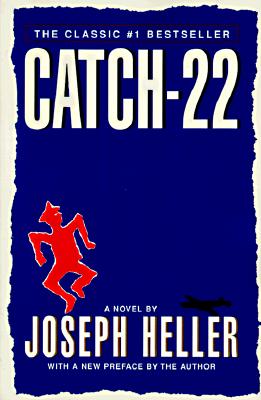
Take this "What book are you?" quiz and let me know what you get! I'm apparently Catch 22 - one of my favorite books. Life does put me in perpetually untenable situations and I *am* incredibly witty and funny, so I like to think it's right on!


You're Catch-22!

by Joseph Heller

Incredibly witty and funny, you have a taste for irony in all that you
see. It seems that life has put you in perpetually untenable situations, and your sense
of humor is all that gets you through them. These experiences have also made you an ardent pacifist, though you present your message with tongue sewn into cheek. You
could coin a phrase that replaces the word "paradox" for millions of people.


Take the Book Quiz.

Friday, September 07, 2007

The Keep

I really enjoyed Jennifer Egan's Look at Me (which I wrote about here and here). The Keep (2006) is also a great read, although slightly less theoretical than the Foucauldian Look at Me. Egan has this very clever way of writing - very accessible, exciting, almost like a tabloid (her characters have a rock star quality, in an effed up Britney/Lindsay kind of way) - but they also appeal to the reader on a much higher intellectual level than they might initially indicate.

The Keep is almost a Gothic novel and has fantastical elements that make the book a really fun page-turner. In it, Danny is invited by his cousin, Howard, to help remodel a castle in Eastern Europe. Danny's eager to leave New York and escape some unexplained spot of trouble, but staying with Howard is awkward because he did something terrible to his cousin when they were children. I won't write anymore because I don't want to ruin it for you.

I'm also reading a book of short stories called This is Not Chick Lit. There are some fabulous short stories by contemporary women writers (including Egan) as well as a rather interesting intro by Elizabeth Merrick that fundamentally annoys me because I don't appreciate the term "chick lit". While (so many!) women are desperately trying to define "chick lit" and rank it in the (largely male-dominated) world of literary "greatness" I'm wondering why we don't celebrate the success of WOMEN writers and that WOMEN readers are are so literary. And if I hear one more person say Jane Austin was the original "chick lit" author, I'm gonna poke them with a Manolo Blahnik.

Thursday, August 30, 2007

One Book One Chicago

It's been announced that the fall 2007 One Book One Chicago is Arthur Miller's play, The Crucible. I think it's a bit of an odd choice, although a wonderful play. I've written about their odd choices before. I think it would be better to choose a book that's more reflective of Chicago.

I do think it's an awesome idea though, despite the fact that it hasn't really caught on. It's fun to see a lot of people reading the same book (as we witnessed recently with Harry Potter 7). I notice that San Francisco's One City One Book is Cane River and Indianapolis's One Book One City is Slaughterhouse Five. If your city has a program or if you have an idea for the perfect book for your city, I'd love to hear about it!

I finally got a library card for my new sleepy community (I hope no one here ever accuses me of being a witch!). I experienced the unprecidented event of finding every book I wanted available and brought home a lovely little pile that I doubt I will be able to read in a month: The Keep by Jennifer Egan, Sense and Sensibility by Austen, The Mill on the Floss by Elliot (Mary Anne Evans), two Iris Murdoch books: Henry and Cato and Under the Net; Toujors Provence by Peter Mayle, Revolution from Within by Gloria Steinem, and a book of essays and manifestos on gender roles. Oh, I love a good manifesto.

Monday, August 27, 2007

The Inheritance of Loss

The Inheritance of Loss is a gorgeous book by Kiran Desai. It won the Man Booker Prize in 2006 seems to be a favorite of book groups everywhere - it's complete with one of those annoying "reading group guides" in the back that I never read. ("Huh, what are some of the motifs?")

Desai's language and characterization is stunningly beautiful. It's a challenging read for me, due to the political aspect, which I'm sorry to say I was largely unfamiliar with, but, the text was so beautiful that at times I just gave myself over to the language. Note to self: try reading just one book at a time...

The story centers largely around an Indian judge, who was educated in Britain, and his charge, Sai. The judge is a hateful and embittered man, unable to feel a part of either British or Indian culture. Sai is a lovely young woman who falls in love with her Nepali tutor. Their long-time, nameless cook is always viewed as nothing more than a servant. The cook sends his son to America in hopes that he will find success there. About half of the book is devoted to the son's disappointments in NY, his movement from one restaurant to another, his only acquaintances other immigrant workers that work in the restaurants - all suffering from the same problems - the expectations of their families, the stress of making enough money, finding a place to live on very little wages, requests from family to help other immigrants when he can barely support himself.

Two of my favorite characters are Loa and Noni, wealthy sisters who find themselves unable to continue living carefree in India:
It did matter, buying tinned ham roll in a rice and dal country; it did matter to live in a big house and sit beside a heater in the evening, even one that sparked and shocked; it did matter to fly to London and to return with chocolates filled with kirsch; it did matter that others could not. They had pretended it didn't, or had nothing to do with them, ad suddenly it had everything to do with them. The wealth that seemed to protect them like a blanket was the very thing that left them exposed. They, amid extreme poverty, were baldly richer, and the statistics of difference were being broadcast over loudspeakers, written loudly across the walls. The anger they had solidified into slogans and guns, and it turned out that they, they, Lola and Noni, were the unlucky ones wouldn't slip through, who would pay the dept that should be shared with others over many generations.

The book reminded me quite a bit of Nicole Krauss's History of Love, another book about inter-cultural and cross-continental lives. Or, maybe it's just the title structure. I thought, if I ever finish my novel, I'll follow their lead and call it The Turpitude of Forgetfulness.

Saturday, August 25, 2007

Harry Potter and the Deathly Xenophobia

Note: No Spoilers

Way back in the late nineties, my sister encouraged me to read, and gave me her paperback copy of, Harry Potter and the Sorcerer's Stone. I fell for the book pretty hard, and passed it on to a certain husband, who finished it, looked up at me and said, "Did you know there's going to be six more of these?!?"

Not long after, I learned that there were differences between the "English" version (published by Bloomsbury) and the "American" versions (published by Scholastic) of the text, and, purists that we are, we ordered all subsequent books from the UK.

What are the differences?
The cover art of all 7 books is different for each version, as are things like font size (American is larger), number of pages, and punctuation (for example, in England they use a single quotes around dialogue and don't put a period after words like "Mr." and "Mrs.") There are also some spelling differences (gray/grey, neighbours/neighbors). People with more patience than me went through the entire first book and noted every word change between the British Philosopher's Stone and the Sorcerer's Stone. They are all fairly ridiculous, like changing "trainers" to "sneakers" and "lavatory" to "toilet".

I was quite curious to discover what differences there were between versions of the last book, and ended up reading a friend's American version while a certain husband read the British version. One of my friends joked that they probably just changed every "bloody" to "fucking". "Yeah," I said, "And all the 'snogging' to 'fucking' too!" So, it was with a certain amount of glee that I came across an "effing" in the American version, and scampered off to the British version - would it read "bloody"? No, it said "effing" too. Huh.

I had the patience to compare only the first 5 pages of Deathly Hallows word for word before giving up looking for differences, but, oh, blessed internet, this guy scoured chapter 12 and discovered some silly changes that had him heading for the dictionary.

Lack of faith, Loss of Opportunity
Something I really hate are those annoying jackasses who claim there's British English and then there's American English. No. We're all speaking English. I've got one thing to say to these bloody nitwits who claim I'm speaking a "lower" form of English, all soggy with Americanism: I'm sorry, but I can't talk to you. I don't understand a word you're saying.

The question isn't "What are the changes?" but "WHY are there changes?" Every single word change in the Harry Potters, every extra comma, every added period is an insult. The books were written in English, and Americans read... English! It's simply outrageous that an "American" version exists. Because they are ostensibly children's books, the changes, supposedly made for the good of the children, exhibit an outrageous underestimation of American children's adaptability, and denies them the opportunity to ask a question, pick up a dictionary, and learn something about another culture. And it's not just kids that lose the opportunity, as shown by the adult reader and his dictionary above (Baize Over a Bugerigar, by Frederick Wemyss).

These lingual differences amount to nothing more than xenophobia, sure, not an uncommon phenomenon in the United States, but a curious occurrence in the borderless world of literature. It boggles the mind to think that any book editor would change the language of a book IN ENGLISH for ENGLISH READERS. That they continued to do so, even in the seventh book, reveals a bizarre distrust of Scholastic's readership. It's a dark blotch on an otherwise incredible series that has drawn such a diverse crowd of readers. 8.3 million people bought the Deathly Hallows in the United States during the first 24 hours (source) - they had a lot of faith in Harry, but Scholastic didn't have much faith in them.

Wednesday, August 22, 2007

The Kite Runner

Khaled Hosseini's The Kite Runner tells the life story of Amir, who grows up in Afghanistan. His closest companion, although not his friend, Amir is careful to state, is the servant's son, Hassan. Although Hassan is a (almost mythically) loyal and true friend, Amir in his immaturity and jealousy treats him very badly. Amir moves with his father to the United States when the revolution begins, but he returns to a much changed Afghanistan to attempt to right some of the wrongs from his youth.

I found Hooseini's prose simple and dull, but his storytelling is compelling, and the Kite Runner is a real page-turner. His descriptions of a peaceful Afghanistan (and the later dramatic transformation under Taliban rule) dispells some of the rhetoric that the country was a just a massive shit-hole anyway before we bombed the hell of out if, which is the only story that we seem to hear in the US. Another book that I love very much for such enlightening information is Tony Kushner's brilliant 2002 play Homebody/Kabul, which is, of course, best seen on stage, but a good read as well. The Homebody says, in the absolutely magnificent opening monologue which I saw at the Steppenwolf starring Amy Morton several years ago:
I did know, well, I have learnt since through research that Kabul, which is the ancient capital of Afghanistan, and where once the summer pavilion of Amir Abdur Rahman stood shaded beneath two splendid old chinar trees, beloved of the Moghuls, Kabul, substantial portions of which are now great heaps of rubble, was it was claimed by the Moghul Emperor Babur founded by none other than Cain himself. Biblical Cain. Who is said to be buried in Kabul, in the gardens south of Bala-Hissar in the cemetery known as Shohada-I-Salehin. I should like to see that. The Grave of Cain. Murder's Grave. Would you eat a potato plucked from that soil?

Anyway, all of which is to say that naturally Afghanistan is simply not a dispensable country, it's got it's own beautiful, rich history and is populated by its own fair share of brilliant people. There's just that weird Buzkashi thing...

Be warned, The Kite Runner is pretty depressing book, with themes of shame, silence, the seemingly innate hatefulness of children, man's inhumanity to man - I actually had to stop reading it for a while because I got so depressed. Whether there are any brief glimpses of hope is really up to you. I found very few.

Monday, August 13, 2007

Dogeared

My friend Sonya is travelling across the lower 48, interviewing and photographing people reading - a country-wide expansion of her localized project (People Reading) to do the same in San Francisco. Her goal is to hit all 48 contingent states in 2 months on a Greyhound Discovery pass - kind of like the poor man's EuroPass. I love both projects, and, as I've said before, Sonya's frank and non-judgemental presentation of the wide range of both people and books she encounters is refreshing and enlightening. Sometimes I get a little frustrated with this land of ours, and then I'll see someone reading Dostoevsky and I have new hope. Lately Harry Potter and the Deathly Hallows appears again and again, and it's just incredible to see all manner of people enjoying the same book.

I've always wanted to be featured in Sonya's blog - and finally my dream came true!

Check out Dogeared to see if Sonya's coming through your area and get a glimpse of what people are reading across the United States!